

This Tree Grows Caterpillars
How one Sycamore taught us to stop fixing and start noticing

No, it’s not an alien. Look closer.
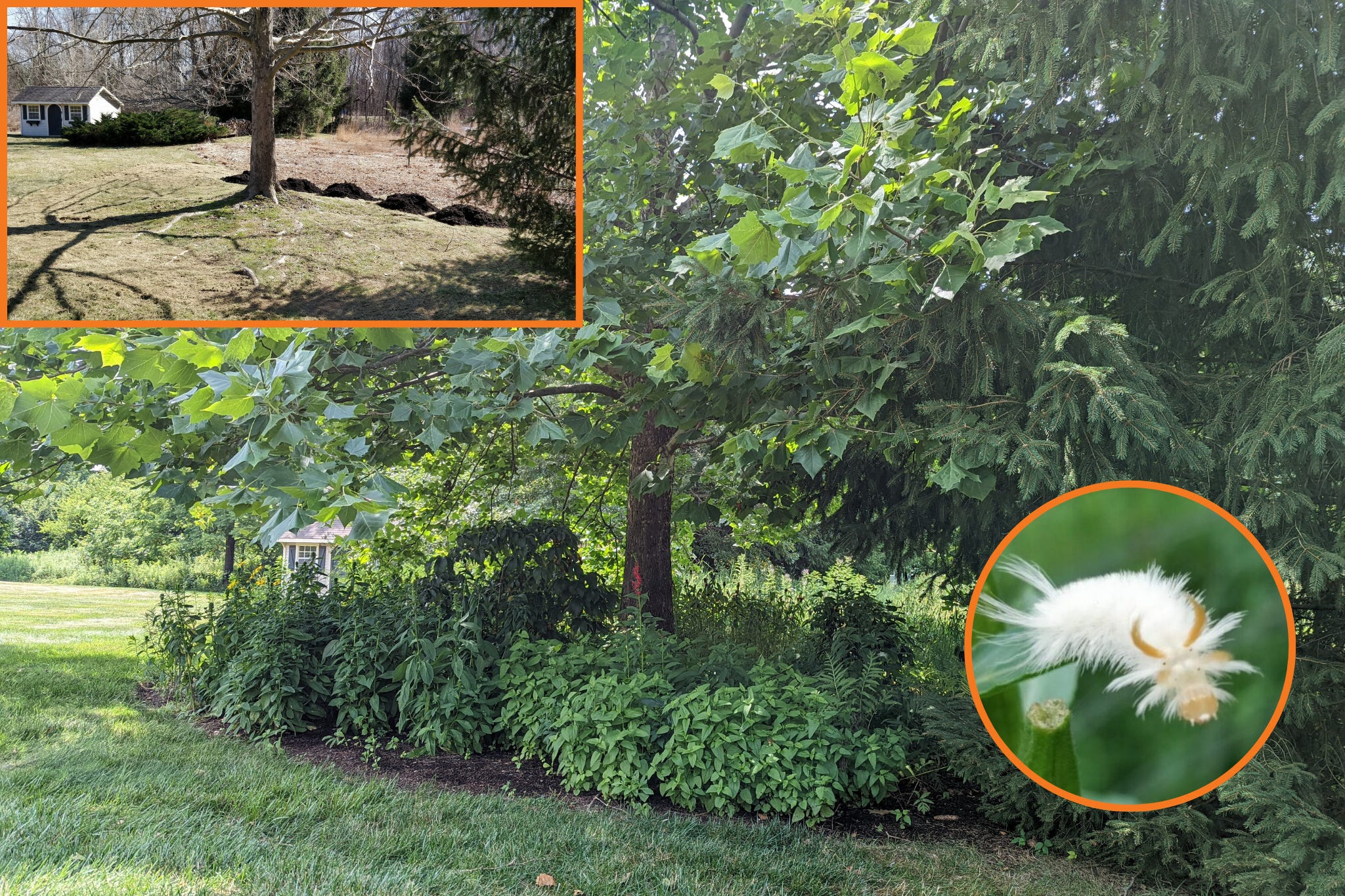
This is the caterpillar of the Sycamore tussock moth (Halysidota harrisii)—fuzzy, unhurried, and completely at home on the bark of our American Sycamore (Platanus occidentalis). It has been going about its business here long before we thought to notice it.
That noticing started with a problem, as it often does. The old Sycamore in our backyard had roots that had begun to lift and spread, making the lawn beneath it impossible to keep.
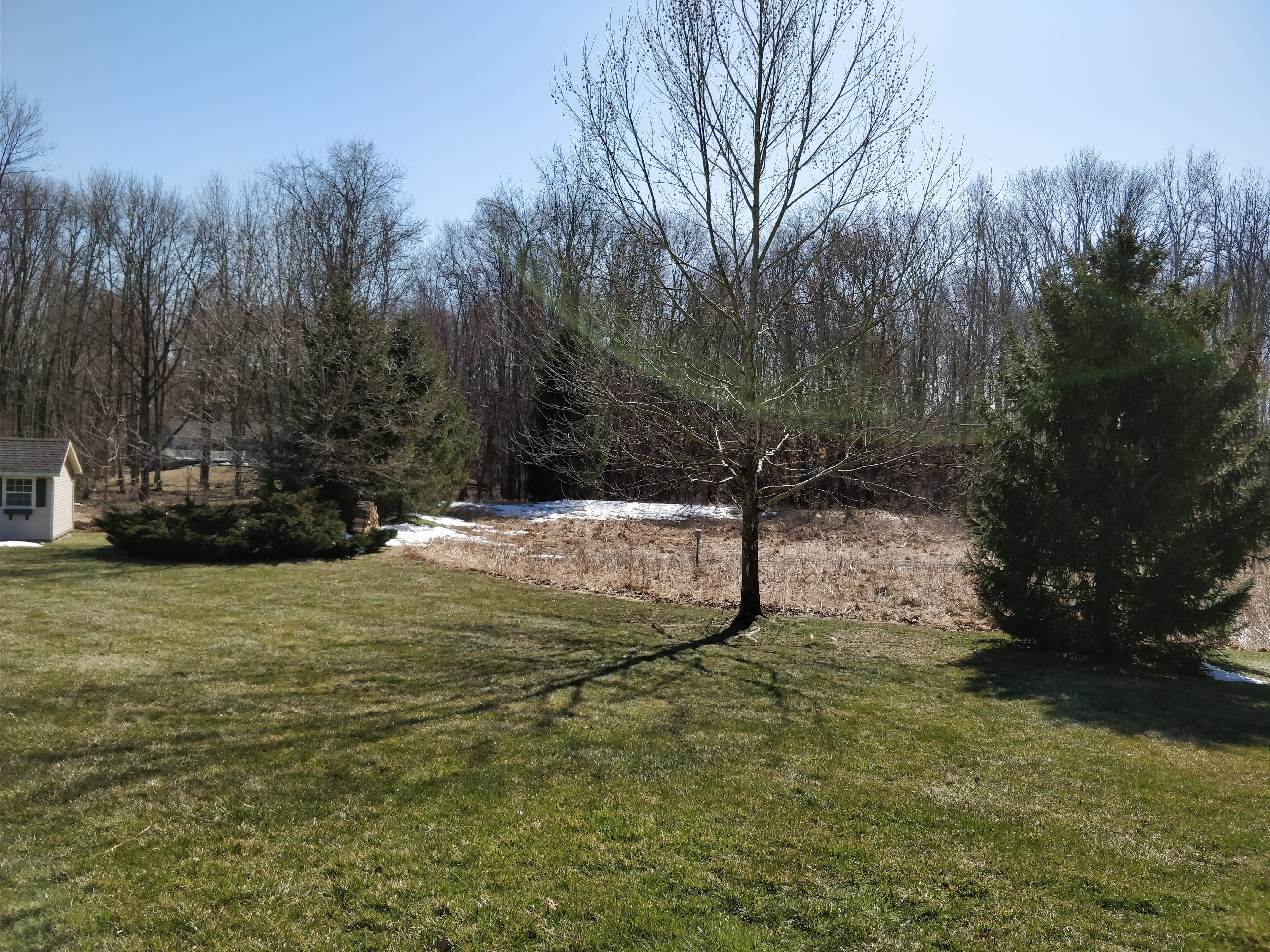
Rather than fight the tree, we followed its lead. We removed the lawn and let the Sycamore become what it had always wanted to be. The anchor of its own small ecosystem.
Reading Doug Tallamy’s Nature’s Best Hope helped us understand what was already unfolding. The Sycamore tussock moth uses the Sycamore as its host plant, and a layered landscape beneath the tree—with leaf litter left intact through winter—gives pupating caterpillars exactly the shelter they need. What we had called a “problem area” was, it turns out, an invitation.
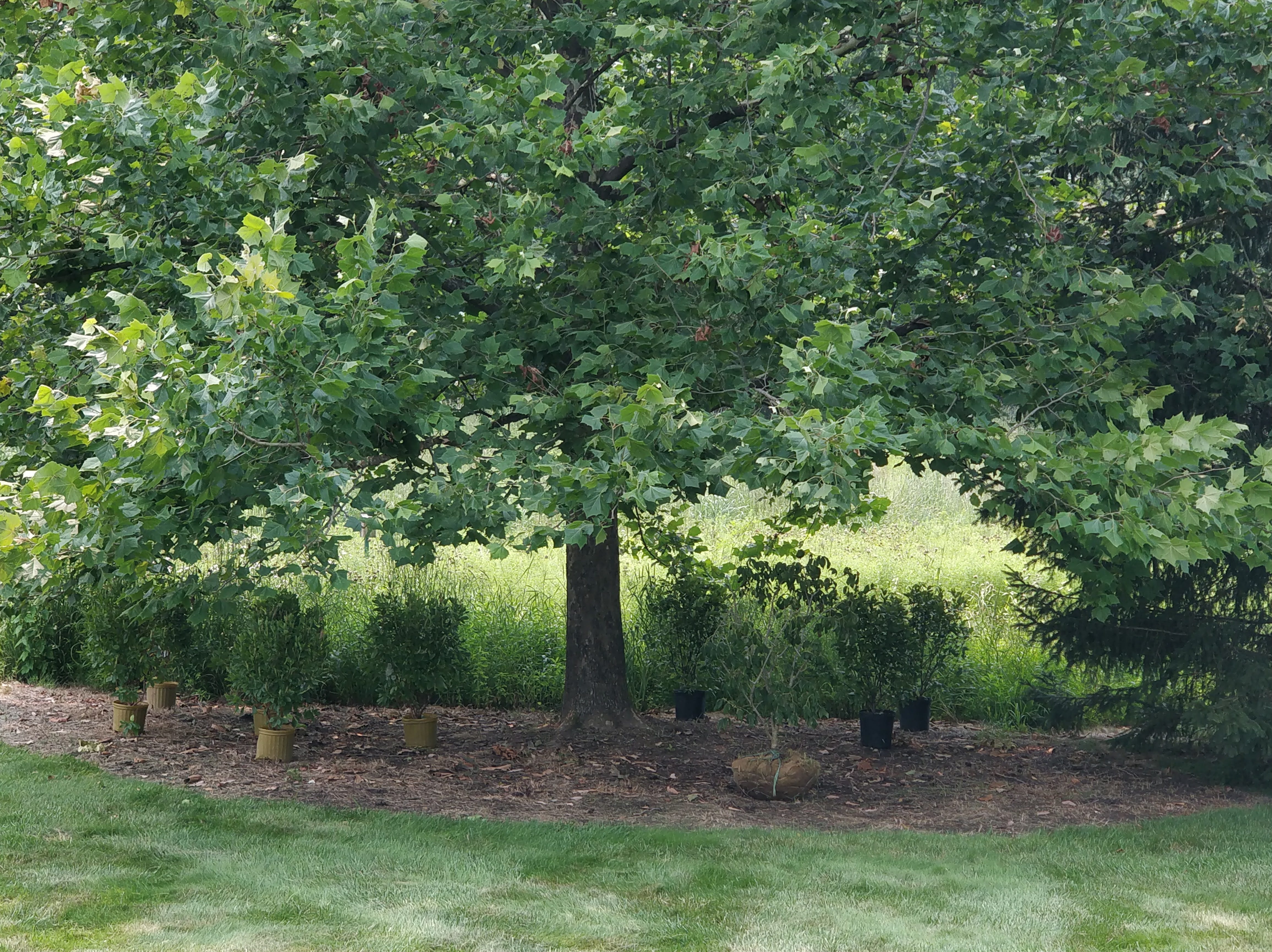
So we planted into it. Around 540 square feet of shade-loving natives now grow beneath and around the tree: Pink Turtlehead, Mistflower, Dwarf Joe Pye Weed, Cardinal Flower, Great Blue Lobelia, Ostrich Fern, Bee Balm, Sensitive Fern, and Obedient Plant. Red Buckeye and Pale Pink Summersweet (Clethra alnifolia) fill in the middle layer. Some Black-eyed Susans arrived on their own from a neighboring garden—a reminder that nature has its own planting agenda.
The rule we follow now: don’t rake in the fall. Tallamy calls fallen leaves “black gold,” and that’s exactly what they are—shelter, insulation, and eventually soil. The life cycle of the tussock moth depends on that layer. So does much else we haven’t learned to see yet.


The garden was planted in spring of 2021. By that summer, a hummingbird was already working the Bee Balm (Monarda didyma ‘Jacob Cline’). We didn’t get a photo—they’re too fast. But we were there, watching and noticing what comes along when you make space for it. That’s the point, really. Plant it, leave it be, and then pay attention.
Something is always happening.
