
Butterfly Watch Party
Are the butterflies late, or am I just early?

While everyone is having watch parties for the FIFA World Cup, I too have been attending a few myself. I watch the garden continuously for plays. But instead of picking favorites based on colorful jerseys, I am watching for colorful butterflies. I could be watching ads for VISA and Coca-Cola go around the edges of the playing field, but I am actually watching a common yellowthroat and American goldfinches fly around the edges of the meadow. The bunny that found my basil, and the dawn chorus is at its peak right now.
But the butterflies? Where? I have just not been seeing butterflies this year. Well, let me rephrase that. I have not been seeing as many. What is happening?
I planned the logistics right. I have continuous bloom sequences, I have both host plants and nectar plants, and I have shallow puddling areas. (I have never planned a World Cup soccer watch party but I bet it is challenging considering there is only one 15 min break where guests have a chance to leave the screen. As far as parties go, that one sounds pretty challenging.)
But could the cold spring, late frost, and other factors out of my control be at play here? Or are my expectations too high? Have I set myself up for an “expectation hangover”? I planted for them. Why are they not here? How does one feel when their favorite team doesn’t score the goals they thought they would?
And then I looked back at my camera roll.
The majority of my butterfly pictures start dominating well past the July 10th date. Could it be that I am getting too hyped too early?
Whether that is the case or not, I am trying to flip my perspective. Instead of looking at why the butterflies are not here, like I am looking at the screen and actively waiting for the game…I am trying to constantly remind myself that even though I may not see the quantity of butterflies I had hoped for, there are other elements in the yard worth experiencing.
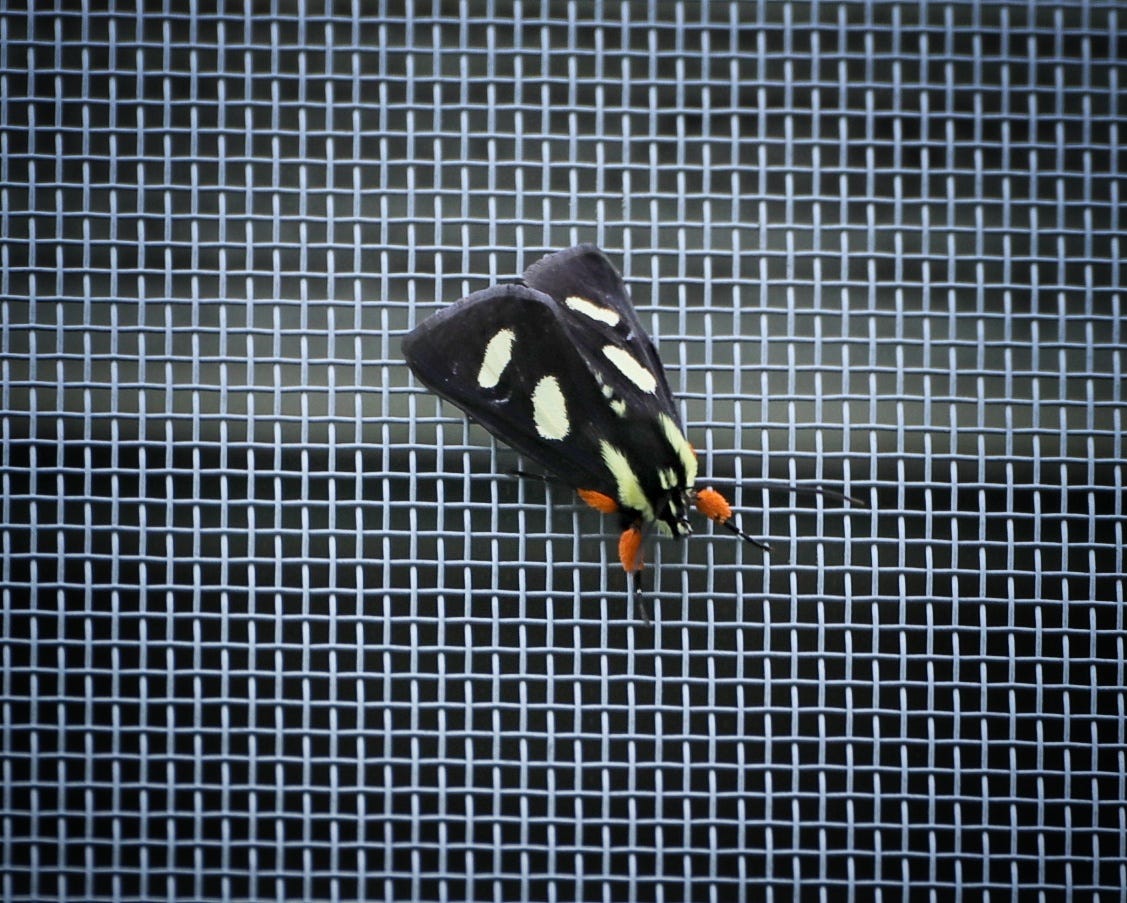
I noticed an unusual colored moth on the screen in the living room, I decided to investigate the creature, only about as large as a small coin. It was beautiful. Turns out it is a moth that is active during the day! And it is often confused for a butterfly. It is called the eight-spotted forester moth. If you have Virginia creeper, you too may have this unique looking creature as that is what their caterpillars feed on.
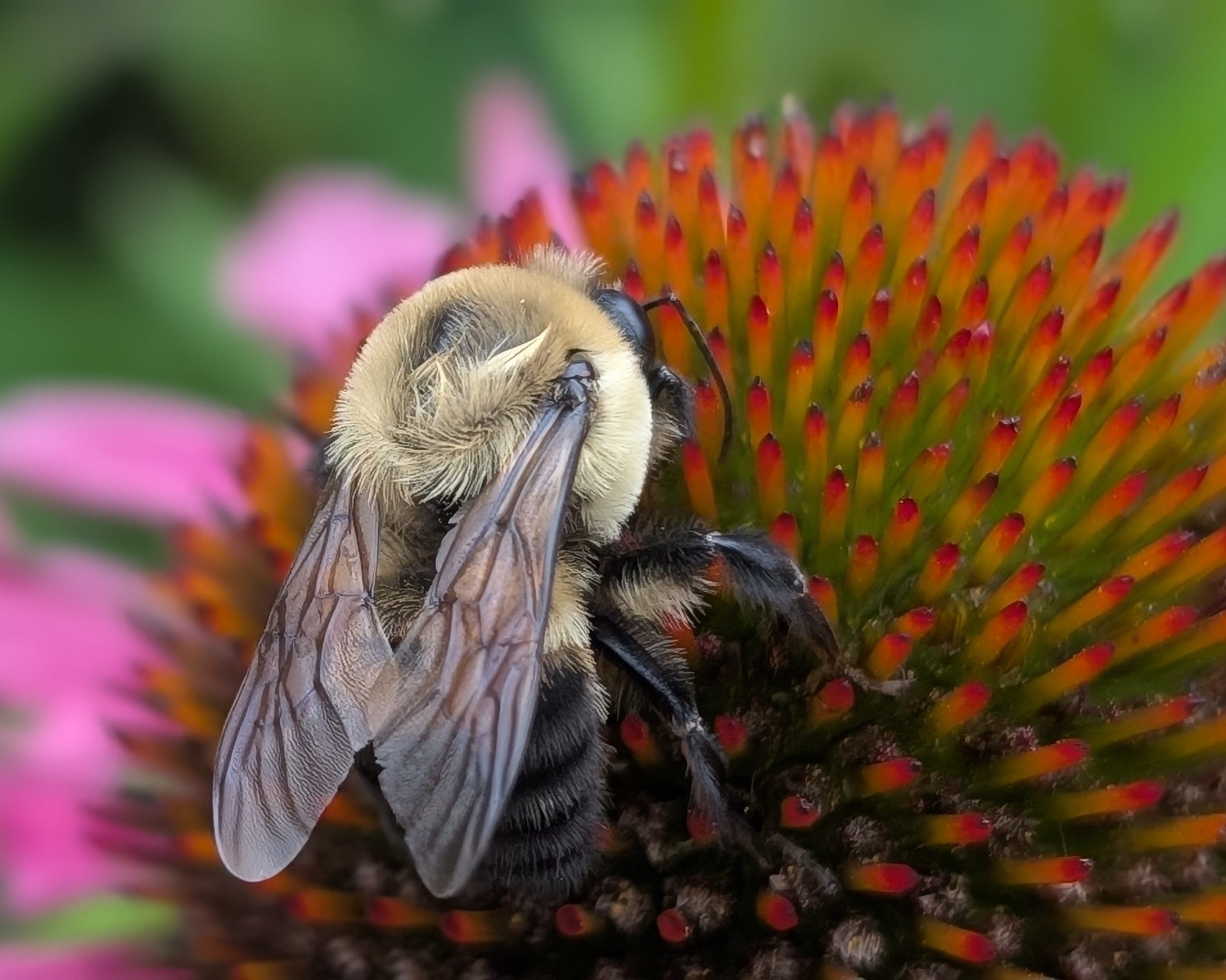
Last summer, I found myself in love with bees. But only one particular kind. The big ones, the size of marbles with their large eyes. And one day in June, I came very close to one as I watched it circle around the “cone” of an Echinacea (Coneflower) plant. The intricate detail of the center of that flower captivated me. The little spikes, the small yellow bits that look like flowers themselves nesting under the tall spikes. The colors and shadows, and the perfect pattern. And the way the bee worked his way around in a perfect unison with the flower.
So maybe the trick is to just not watch for just the colorful butterflies flying around. Perhaps looking for evidence in the form of caterpillars or chewed leaves. Leave the looking for big colorful things to surprise. And instead, focus on the tiny flowers. Look to the elements of the garden that are right in front of you. And just know that you prepped for the event. The garden is ready. And maybe there is simply a delay that is not within our control. And, may we are just a little too early.

Like you, I have seen only a few butterflies. Monarchs and swallowtails. The pond in my
nature park has been surprisingly missing the usual mallards and geese. An occasional
oriole, goldfinch or cardinal, but mostly red-wing blackbirds, robins and sparrows.
Even when there are few types of birds to be seen, the trees themselves are
amazing in their diversity and beauty. I never experience my daily nature walks
as disappointing or boring. This is my sanctuary, and there is always something
deserving of my attention and appreciation.